For a new activewear brand, the first sample is more than a formality. It is where a sketch, a fabric brief and a fit expectation become a garment that can actually be measured, worn and approved. The most expensive mistake is not a high sample price; it is moving into bulk production before the sample is genuinely signed off.
Why brands get stuck at the sample stage
Most sampling delays come from an incomplete brief: a supplier receives an inspiration photo but no target measurements, fabric composition, trim details or approval standard. The result can look close in photos while still failing on stretch recovery, opacity, zipper behavior or body fit.
1. Start with a decision-ready tech pack
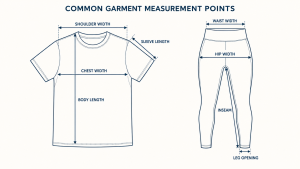
A workable tech pack should include front and back flats, garment measurements with tolerances, construction notes, fabric target, color reference, logo position and size, labels, packaging and test requirements. If a detail is not known, label it as an open decision rather than letting a factory guess.
2. Ask what the MOQ applies to
MOQ is rarely one universal number. It can change by style, color, fabric booking, print method, logo trim, size ratio and packaging. Ask the supplier to separate the minimum for the garment, the fabric/color, and each customized component. This makes a smaller pilot order easier to assess honestly.
3. Separate development samples from pre-production samples
A development sample proves pattern direction and construction. A pre-production sample should match the approved bulk fabric, color, trims, artwork and labeling route as closely as possible. Treat the second stage as the production control reference, not as a cosmetic photo sample.
4. Build time into the approval cycle
Lead time is not only sewing time. It can include pattern work, material sourcing, knit-down or lab dip, artwork confirmation, sample making, courier transit and revision. Ask for a dated critical path with the approval points marked. A supplier should flag any material with a longer booking window before the order is placed.
How Long Does It All Take? The Full Timeline
“How long will this take?” is the question every activewear buyer asks — and the one most likely to cause friction later. A realistic timeline protects your launch date, your cash flow, and your relationship with your factory.
| Stage | Typical duration | Who drives it |
| 1. Requirement review & quotation | 2–5 working days | Factory (needs your tech pack) |
| 2. Proto / fitting sample | 7–10 working days | Factory |
| 3. Sample revisions (if needed) | 3–7 working days per round | You + factory |
| 4. PP (pre-production) sample | ~7 working days | Factory |
| 5. PP approval & final confirmation | ~7 working days | You |
| 6. Bulk production | 25–40 days (calendar) | Factory |
| 7. Final inspection | 2–5 working days | You / third party / factory QC |
| 8. Shipping | 3–7 days (air/express) or 25–40 days (sea) | Forwarder |
Realistic total: 60–100 days from tech pack to delivery at your warehouse for a first order shipped by sea. Repeat orders with approved patterns and stock fabrics can be significantly faster.
5 Most Common Delays (and How to Avoid Them)
- Incomplete tech pack. Missing size charts, vague fabric descriptions (“stretchy black fabric”), or no artwork files. Fix: use a tech pack template and fill every field before sending.
- Fabric arrives late. Custom-dyed or custom-knit fabric is the #1 schedule killer. Fix: ask the factory to confirm fabric lead time separately from garment lead time, and consider stock fabrics for time-sensitive launches.
- Endless revision rounds. Changing the design direction mid-sampling resets the clock. Fix: consolidate all feedback into a single marked-up document per round.
- Holiday blackout periods. Chinese New Year (typically Jan–Feb) shuts factories for 2–4 weeks; Golden Week (early October) for one. Fix: ask your factory for their holiday calendar at the start of the project.
- Shipping surprises. Port congestion, customs holds, or underestimating sea freight time. Fix: get a freight quote early, confirm Incoterms (FOB vs. DDP), and add a 1–2 week buffer.
How to Shorten Your Lead Time
- Use stock fabrics and trims — eliminates mill lead time, often saving 2–4 weeks.
- Prepare materials in parallel — finalize packaging/hangtag artwork while the proto sample is being sewn.
- Send one complete brief — every “oh, one more thing” costs days.
- Accept split delivery — part by air for launch, balance by sea.
- Order in the off-season — faster sampling slots and more attention.
Plan Backwards: A Worked Example (Launch March 1)
~Dec 1: send complete tech pack → ~Dec 20: approve proto sample (incl. 1 revision) → ~Jan 10: approve PP sample → ~Feb 10: bulk complete, inspection passed → Feb 10–28: sea freight + customs → Mar 1: launch. If the tech pack slips to mid-December, you are choosing between air freight and a delayed launch.
5. Use a sample review scorecard
- Fit: key body measurements, ease and movement
- Fabric: weight, hand feel, opacity, stretch and recovery
- Construction: seam type, stitch quality, reinforcement and zipper function
- Branding: artwork size, placement, color and wash resistance
- Commercial details: labels, packaging, carton marks and size breakdown
6. Keep revisions traceable
Send one consolidated feedback document instead of scattered chat messages. Number each change, attach marked-up photos, state whether it is mandatory or optional, and request written confirmation before the next sample starts. This prevents an approved point from being accidentally reversed.
7. Do not leave labels until the end
For goods sold in the United States, textile and care-label requirements can involve fiber content, country of origin, the responsible business identity and care instructions. Confirm the market route with your importer or compliance adviser early. The FTC provides practical guidance on textile and care labeling.
7 Sampling Mistakes That Delay Your Launch
Most sampling delays are not bad luck — they are repeatable mistakes. Here are the seven we see most often, and how to avoid each one.
Mistake 1: A tech pack with pretty pictures but no measurements. You send mood-board images and “like this but in burgundy” — no size chart, no construction details. The factory guesses, and guesses get sewn in. Avoid: send a decision-ready tech pack (see section 1): flat sketches (front/back), full size chart with grade rules, fabric composition and weight, Pantone color references, logo artwork with placement and dimensions, label and packaging requirements. Mark anything undecided “TBD — please propose”.
Mistake 2: Choosing fabric from photos alone. You approve fabric from a photo; the sample arrives plasticky, with poor recovery, or see-through. Avoid: always request physical swatches first — check hand-feel, stretch and recovery, opacity, and weight. Squat-test the actual garment, not just the swatch.
Mistake 3: Changing ten things in a single revision round. New neckline + new waistband + new color + moved logo in one round — the factory cannot tell which change caused which problem. Avoid: one category of change per round (round 1: fit and construction; round 2: color and branding; round 3: polish). Mark up photos with arrows, and keep each round traceable as described in section 6.
Mistake 4: Skipping shrinkage and colorfastness testing. The sample fits perfectly; bulk arrives a size smaller with faded color after two washes. Avoid: ask for shrinkage and colorfastness test reports on the bulk fabric lot (not just sample yardage). For cotton blends, expect 3–5% shrinkage.
Mistake 5: Bulk fabric that does not match the sample. You approved a deep black sample; bulk arrives as washed-out charcoal. Avoid: insist the PP sample is cut from the actual bulk fabric lot; approve the lab dip against your Pantone reference; get approval in writing.
Mistake 6: Never confirming the logo technique on a sample. “Logo on chest” arrives as cheap heat transfer when you imagined tonal embroidery — or embroidery puckering on 4-way stretch. Avoid: specify the exact technique (screen print, embroidery, heat transfer, silicone, reflective) with dimensions and placement in the tech pack; require a strike-off approval first.
Mistake 7: Forgetting about labels and packaging until bulk. The garments are perfect — but nobody sampled the woven label, hangtag, polybag, or carton marks. Avoid: include label and packaging specs in the first tech pack; request physical label and packaging samples alongside the garment (and confirm regulatory label content early — see section 7).
How Our Sampling Works
- Requirement review — we check your tech pack for completeness within 2–5 working days.
- Proto / fitting sample — 7–10 working days after all details are confirmed.
- Revisions — 2–3 rounds included; consolidated feedback, 3–7 working days each.
- PP sample — ~7 working days production, sealed as the bulk reference standard.
- Bulk — only starts after your written PP approval.
Full details on our sample policy page.
Questions to ask before paying for a sample
- Which parts of the quote are refundable or creditable against bulk production? Our sample fees are fully deductible once your bulk order exceeds 500 pieces per style — see our sample policy.
- What exact fabric, trim and artwork will be used for this sample?
- What is the expected revision process if fit or fabric needs changing?
- What does the bulk MOQ apply to: style, color, fabric or all of them?
Frequently Asked Questions
How long do activewear samples take?
Proto/fitting samples: 7–10 working days after all details are confirmed. PP samples: ~7 working days to produce plus ~7 for your review.
Is the 25–40 day bulk production time quoted in working days or calendar days?
Bulk production is quoted in calendar days (about 5–8 weeks). Sampling is quoted separately in working days. Bulk time starts only after PP sample approval and deposit receipt, not from first contact.
Can production be expedited?
Sometimes for simple styles with stock fabrics, but rushing cutting and sewing raises defect rates. Better to expedite your side (fast approvals).
How far in advance should I order before a peak season?
For a spring launch via sea freight, start 4–5 months out. For Q4 holiday, start in early summer.
Does the factory’s holiday schedule affect my order?
Yes — Chinese New Year stops production 2–4 weeks; add a full month of buffer if your timeline crosses late Jan–Feb.
What’s the difference between FOB and DDP for lead time planning?
Under FOB you handle freight and customs after port departure; under DDP the factory’s agent delivers to your door — simpler but pricier.
How many sample rounds are normal?
Two to three rounds total (proto + revisions, then PP) is normal. More than four usually signals a tech pack problem, not a factory problem.
Who pays for samples?
You do — samples are charged separately from bulk. Our sample fees are fully deductible once your bulk order exceeds 500 pieces per style. See our sample policy.
Can I get samples in multiple colorways?
Yes, but each colorway needs its own lab dip approval and may add time. Sample one core colorway first.
What if the bulk doesn’t match the approved PP sample?
The PP sample is the binding reference — non-matching goods can be rejected or reworked at the factory’s cost. That’s why written PP approval matters.
Should I test the sample garments by wearing/washing them?
Absolutely — wash-test every sample at least 3 times; wear-test leggings through a real workout.
Turn a sample into a production decision
A good factory relationship begins with clarity, not promises. When the brief, approval checkpoints and commercial minimums are visible, both sides can decide whether a first launch should move forward, be revised or be simplified. That protects budget and gives the final product a much better chance of matching the brand vision.
Need a sample plan for a custom sportswear project? Send your tech pack, target market, quantity estimate and desired launch date so the development route can be assessed before bulk production.
Reference: FTC textile labeling guidance.
Keep Reading: Cost, Fabric and Production
Sampling is one part of the puzzle. Our Activewear & Swimwear MOQ Guide breaks down how minimum order quantities are calculated, and our Activewear Fabric Guide helps you choose and spec the right material before you sample. Ready to start? Contact Vista Clothing for a free quote and sampling plan.
Ready to Start Your Custom Collection?
Get a free quote and sample from a China OEM/ODM activewear and swimwear manufacturer. Low MOQ from 100 pieces, private label and full customization.
Related product categories: