Chlorine is the single biggest enemy of swimwear. Pool water attacks elastane (Spandex/Lycra), strips color and slowly breaks down the fibers that make a swimsuit hold its shape. For brands building a swim line, understanding chlorine resistance — and its limits — is the difference between a product customers re-order and one that generates returns.
What Is Chlorine-Resistant Swimwear Fabric?
Chlorine-resistant fabric is engineered to withstand chlorinated pool water for far longer than standard swim fabric. Ordinary swim fabric can fade, sag and lose elasticity after a season of regular pool use. A chlorine-resistant blend — usually a high-quality nylon/elastane or polyester/elastane construction with a chlorine-resistant finish — holds its color, shape and stretch much longer.
Chlorine resistance is not a single fabric. It is a combination of fiber choice, yarn quality, knit construction and finishing. That is why two “nylon-elastane” swimsuits can perform very differently after 50 pool sessions.
The Most Important Thing Brands Get Wrong: Not All Colors Wear Chlorine Equally
This is the point most suppliers will not tell you clearly:
Light and pale colors are far less chlorine-resistant than dark and bright colors.
Chlorine is a bleaching agent. Pale shades — white, cream, light grey, pastel pink, baby blue, light yellow — have little color depth, so any fading is immediately visible. On a white or light-colored swimsuit, chlorine exposure quickly turns the fabric slightly yellow or grey, and the color looks “tired” long before the fabric itself fails.
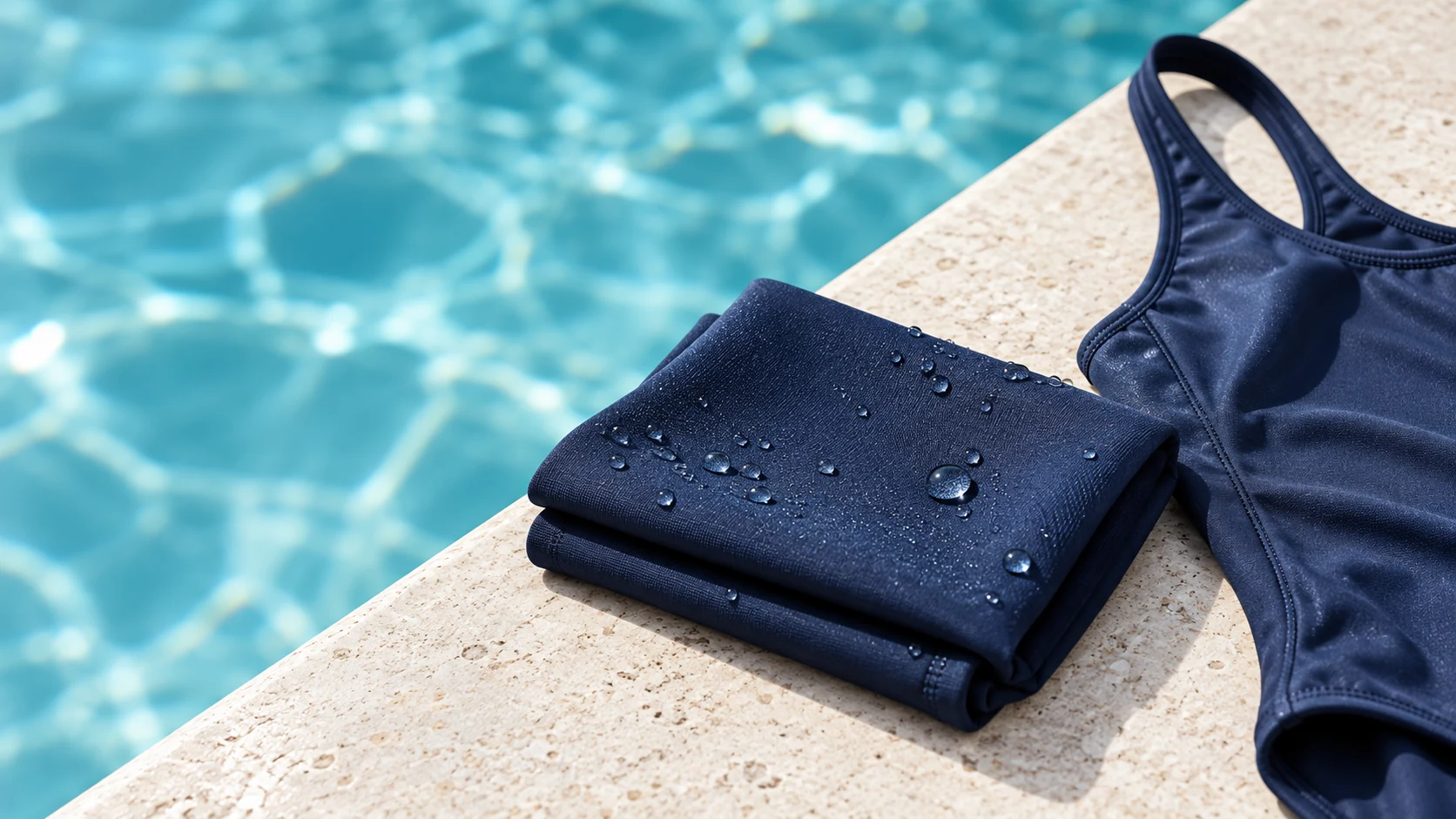
Dark and saturated colors — black, navy, deep green, burgundy, bright red, hot pink, leopard and busy prints — hide fading much better. The same level of chlorine exposure that ruins a white bikini may be barely noticeable on a black or printed one.
The practical takeaway:
- Light/pastel colors: expect noticeable color change sooner; they suit occasional or resort wear better than weekly pool training.
- Dark, saturated and printed colors: the safest choice for high-chlorine environments and training-heavy swimwear.
- White linings and light trims degrade first and are the first place fading shows.
If your target customer swims weekly in a chlorinated pool, steer the collection toward darker, saturated colors — or clearly position light colors as fashion/resort pieces rather than performance training suits.
How to Improve Chlorine Resistance in Your Swimwear Line
- Choose the right base fabric — a chlorine-resistant nylon/elastane or polyester/elastane with a proven finish.
- Avoid cheap elastane — low-grade Spandex fails fastest in chlorine.
- Use darker or saturated colors for training-focused styles; reserve pale shades for lower-chlorine use.
- Test before bulk — ask for chlorine-resistance testing (colorfastness to chlorinated water) on your chosen fabric and color.
- Care instructions matter — rinsing in fresh water immediately after swimming dramatically extends swimwear life.
Chlorine Resistance vs. Other Swimwear Features
Chlorine resistance rarely works alone. Quality swimwear also needs:
- UPF sun protection (UPF 50+ for kids and outdoor wear)
- Quick-dry performance for comfort
- Four-way stretch for fit and shape retention
- Colorfastness to both chlorine and saltwater
Combine these and you have a swimsuit that not only lasts, but that customers recommend.
Manufacturing Chlorine-Resistant Swimwear with Vista Clothing
At Vista Clothing we manufacture custom swimwear using chlorine-resistant nylon and polyester blends. Our range covers bikinis, one-piece swimsuits, board shorts, rash guards and modest swimwear, with full OEM/ODM support — custom fabric, Pantone color matching, size grading, private-label branding and packaging.
Our MOQ is 100 pcs per style per color. Samples are made in 7–10 working days and bulk production typically completes in about 25-40 calendar days after approval. Our factory is BSCI, OEKO-TEX and GRS certified, and third-party testing by SGS, BV or Intertek is available for your order.
We help brands choose the right fabric and color strategy for their market — including advising on chlorine performance so your customers get a product that holds up, season after season.
Frequently Asked Questions
Do all swimwear colors resist chlorine equally?
No. Light and pale colors show chlorine fading much faster, while dark, saturated and printed colors hide it best. Choose darker colors for training swimwear and reserve pale shades for resort or occasional wear.
What is the best fabric for chlorine-resistant swimwear?
A quality chlorine-resistant nylon/elastane or polyester/elastane blend with a proper finish performs best. Avoid low-grade elastane, which breaks down quickly in pool water.
Does chlorine resistance prevent all fading?
No fabric is 100% immune to chlorine. Chlorine resistance slows color loss and fiber breakdown significantly, but light colors will still fade sooner than dark ones, and rinsing after swimming remains essential.
Looking for chlorine-resistant swimwear manufacturing? Get a free quote from Vista Clothing and we’ll help you build a swim line that lasts.
Ready to Start Your Custom Collection?
Get a free quote and sample from a China OEM/ODM activewear and swimwear manufacturer. Low MOQ from 100 pieces, private label and full customization.
Related product categories: